
ERP for schools is no longer a luxury. As institutions grow, broken systems, not people, become the biggest barrier to sustainable success. When a school struggles, the blame usually falls on people. Teachers are overworked. Administrators are inefficient. Students are distracted. Parents are demanding. But what if none of them is the real problem? What if schools don’t fail because of people but because the systems supporting them are broken?
The Silent Crisis Inside Growing Schools Without ERP
Most schools don’t collapse overnight. They struggle slowly. First, it’s small things:
- Attendance records don’t match
- Fee reports take days to compile
- Parents complain about miscommunication
- Staff coordination becomes difficult
Then, as the school grows, these “small issues” pile up. And suddenly:
- Decision-making becomes reactive
- Leadership loses visibility
- Teachers spend more time on admin than teaching
- Trust begins to erode
This is not an education problem. It’s an operational system problem.

This challenge reflects a larger issue we explored earlier around why rural ecosystems are often ignored in India’s tech evolution.
- How Responsive Web Design Improves User Experience
- How Startups Can Leverage AI for Rapid Growth
- How Machine Learning Helps Businesses Make Better Decisions
- How HRMS Solutions Simplify Workforce Management
- AI-Powered CCTV Systems: The Future of Smart Surveillance
Why Effort Stops Working After a Point
In the early stages, effort compensates for poor systems. Dedicated staff stay late. Teachers multitask. Admins manually cross-check data. For a while, effort fills the gaps. But growth changes the equation. Effort does not scale. Systems do. No matter how committed people are, they cannot manually manage:
- Hundreds of students
- Thousands of data points
- Multiple departments
- Real-time parent expectations
When systems fail, people burn out.
The Real Reason Schools Feel “Out of Control”
Ask school leaders what frustrates them most, and you’ll hear things like:
- “I don’t get real-time data.”
- “Everything depends on one or two people.”
- “Reports take too long.”
- “We react instead of planning.”
These are all symptoms of the same root cause: Information is scattered, not structured. When data lives in registers, spreadsheets, WhatsApp messages, and separate tools, clarity disappears. And without clarity, leadership becomes a matter of guesswork.
Why Digital Tools Alone Are Not Enough
Many schools try to solve this by adding tools:
- One app for attendance
- Another for fees
- Another for communication
- Another for exams
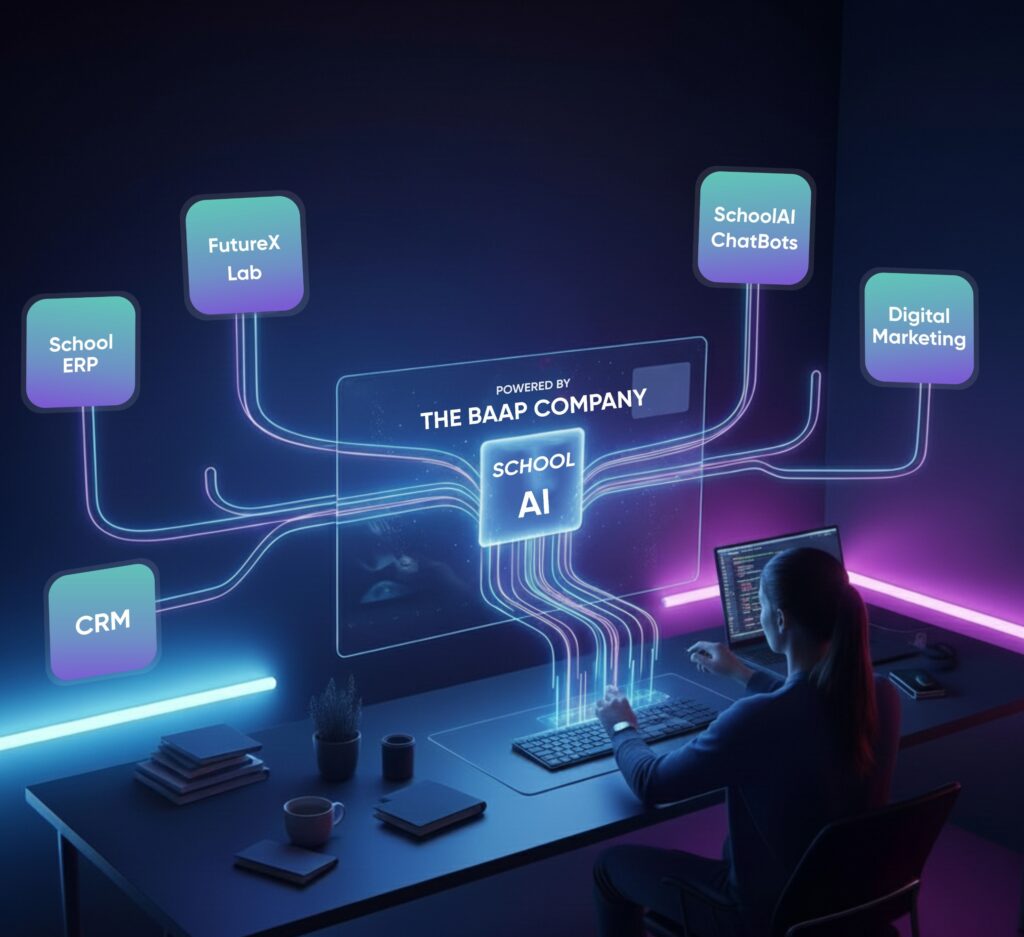
Instead of fixing the problem, this often makes it worse. Why? Because tools without integration create more fragmentation. What schools don’t need is “more software.” They need one connected system.
Systems Are What Separate Stable Schools From Struggling Ones
High-performing schools are not chaos-free because they have better people. They are stable because:
- Processes are defined
- Information flows automatically
- Accountability is built into the system
- Leaders see the full picture, not fragments
These schools don’t rely on memory, follow-ups, or manual checks. They rely on systems that work even when people are absent.
Where ERP for Schools Changes the Game (Without the Buzzwords)
At its core, an ERP is not a tech upgrade. It’s a mindset shift. From:
- Managing tasks → managing processes
- Chasing information → accessing it instantly
- Reacting to issues → preventing them
A good ERP quietly:
- Connects academics, finance, communication, exams, and admin
- Reduces dependency on individuals
- Creates one source of truth
- Gives leadership confidence in decisions
When systems work silently, people can focus on what matters.
Education and Operations Can No Longer Be Separate
Modern schools are expected to do more than manage classrooms. They were expected to prepare students for a future shaped by:
- AI
- Automation
- Digital systems
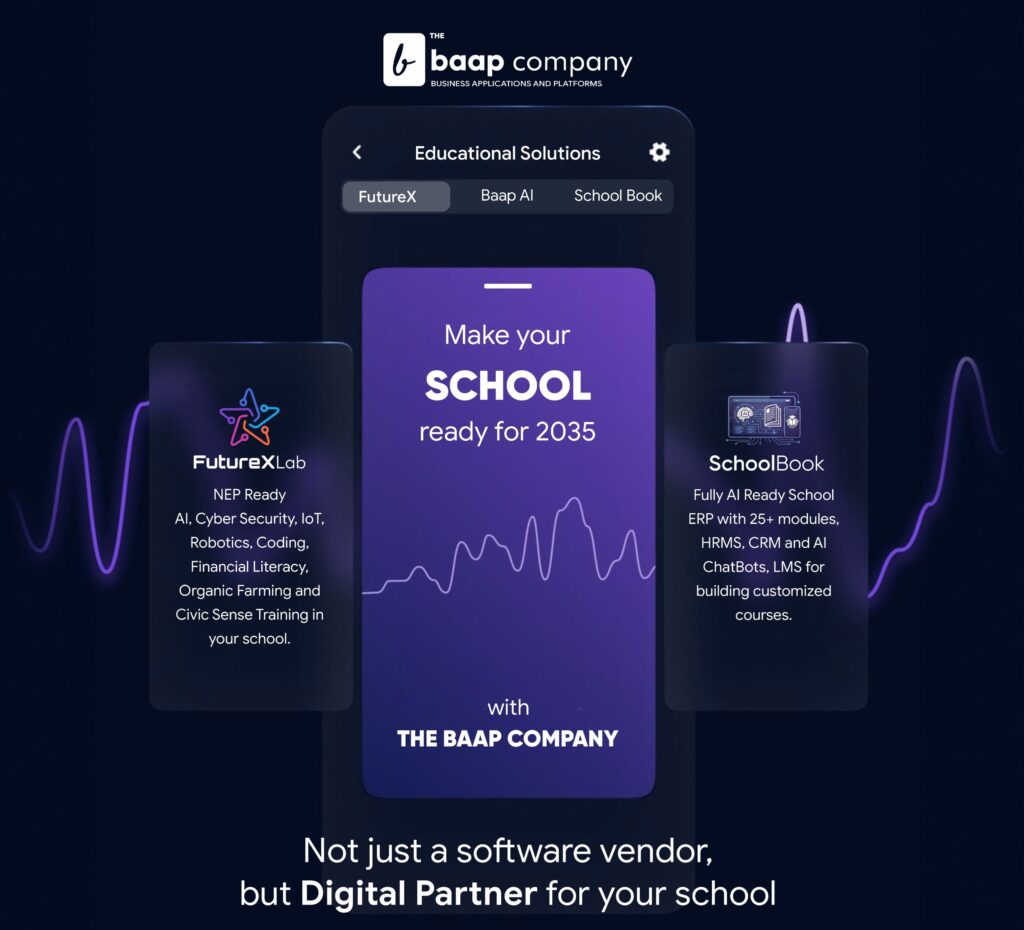
This is why operations and education must evolve together. Skill-focused initiatives like FutureX Lab help schools introduce future-ready learning, while strong operational systems ensure the institution itself can scale sustainably. One without the other creates an imbalance.
The Question Schools Should Really Be Asking
The real question is not:
“Do we need ERP?”
The real question is:
“How long can we keep growing with systems that were never designed to scale?”
Because growth without structure doesn’t lead to success, it leads to stress, confusion, and burnout.
Final Thought
Schools don’t fail because teachers stop caring. They don’t fail because students stop learning. They struggle because systems stop supporting growth. Strong systems don’t replace people. They protect them. And the schools that understand this early don’t just survive growth, they lead it. At BAAP Company, this belief shapes how education-focused digital ecosystems are built: quietly, structurally, and with long-term impact in mind.