Introduction
Education is evolving beyond traditional classroom learning. Today, students need practical knowledge and hands-on experience that prepares them for real workplace challenges. Real-world projects have become an essential part of modern education, helping students apply theoretical concepts to solve actual business and industry problems.
By working on live projects, students develop technical skills, critical thinking, communication abilities, and teamwork. These experiences not only strengthen academic learning but also improve confidence and career readiness. As industries continue to seek job-ready professionals, project-based learning has become one of the most effective ways to bridge the gap between education and employment.
What Are Real-World Projects?
Real-world projects are practical assignments based on actual industry requirements or business challenges. Instead of learning only through textbooks, students work on real applications, software development, research, data analysis, product design, or business solutions that reflect professional environments.
These projects encourage students to think creatively, solve problems independently, and understand how classroom knowledge is applied in real situations. According to UNESCO, practical and experiential learning helps students develop the knowledge, skills, and competencies required for lifelong success.
Why Project-Based Learning Matters
Employers increasingly value practical experience alongside academic qualifications. Students who participate in real-world projects gain exposure to industry tools, workflows, deadlines, and collaborative environments before entering the workforce.
Project-based learning also encourages innovation, continuous learning, and adaptability, making students more confident when facing professional challenges. Educational research from Edutopia highlights that project-based learning improves student engagement, problem-solving abilities, and long-term knowledge retention.
Develops Practical Skills
Real-world projects allow students to build technical and professional skills that cannot always be learned through classroom lectures alone. Whether developing websites, creating mobile applications, analyzing data, or designing business solutions, students gain valuable hands-on experience.
Working on practical projects also improves time management, decision-making, and communication, all of which are essential in today’s competitive job market.
Encourages Critical Thinking and Problem Solving
Every project presents unique challenges that require students to analyze situations, evaluate possible solutions, and make informed decisions. Instead of memorizing concepts, students learn how to approach real business problems with creativity and logical thinking.
This problem-solving mindset prepares students to adapt quickly in dynamic work environments and contribute effectively to organizational success.
Builds Teamwork and Collaboration
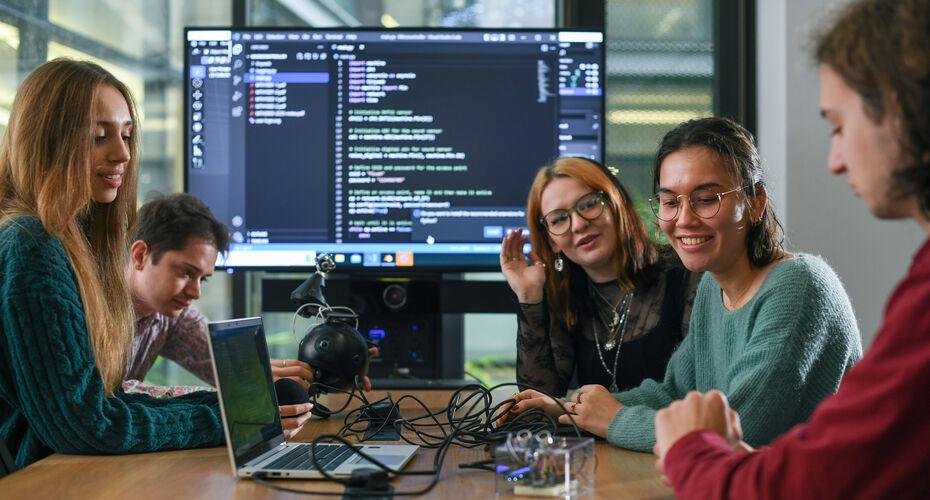
Most real-world projects involve working with teams, similar to professional workplaces. Students learn how to communicate ideas, share responsibilities, manage tasks, and collaborate toward common goals.
These experiences strengthen leadership qualities, interpersonal skills, and the ability to work effectively with people from diverse backgrounds.
Improves Career Readiness
Practical project experience gives students a competitive advantage during internships and job interviews. Employers often look for candidates who can demonstrate real skills through portfolios and completed projects rather than relying solely on academic grades.
Students who have worked on industry-based projects are generally more confident and better prepared to contribute from the first day of their careers.

Key Benefits of Real-World Projects
Project-based learning offers several long-term advantages for students.
- Improves practical knowledge
- Strengthens technical skills
- Enhances critical thinking
- Encourages creativity and innovation
- Builds teamwork and leadership
- Increases confidence
- Improves communication skills
- Creates professional portfolios
- Enhances employability
- Prepares students for real workplace challenges
Industries That Benefit
Real-world project learning is valuable across many disciplines and industries.
- Information Technology
- Artificial Intelligence
- Data Science
- Healthcare
- Manufacturing
- Agriculture
- Finance
- Education
- Digital Marketing
- Software Development
Students from every field benefit from gaining practical exposure before entering professional careers.
Best Practices for Project-Based Learning
Successful project-based learning begins with industry-relevant challenges, experienced mentors, and continuous feedback. Students should work on practical assignments that encourage research, collaboration, testing, and presentation of solutions.
Educational institutions should also partner with industry experts to provide students with meaningful learning experiences that align with current market requirements.
Future Trends
The future of education is becoming increasingly practical and technology-driven. Artificial Intelligence, cloud computing, virtual laboratories, coding bootcamps, industry internships, and collaborative digital learning platforms are transforming how students acquire knowledge and develop professional skills.
Institutions that integrate real-world projects into their curriculum will better prepare students for evolving industry demands and future careers.
Why Choose Baap Company?
At The Baap Company, we believe that practical learning creates future-ready professionals. Through our Education initiatives, students gain hands-on experience by working on real industry projects guided by experienced mentors. Our expertise in Software Engineering, Web Engineering, AI Systems, and Data Intelligence enables students to develop practical skills using modern technologies and industry best practices.
Whether you’re learning software development, Artificial Intelligence, web technologies, or digital innovation, Baap Company provides an environment where students transform knowledge into real-world experience.
Conclusion
Real-world projects have become an essential part of modern education because they prepare students for the challenges of today’s workplace. By combining academic knowledge with practical experience, students develop stronger technical abilities, problem-solving skills, teamwork, and professional confidence.
As industries continue to seek skilled and job-ready professionals, project-based learning will remain one of the most effective approaches to education. Students who gain hands-on experience through real-world projects are better equipped to build successful careers and contribute meaningfully to the organizations they join.
Contact The Baap Company
The Baap Company
Paregaon, Tal. Sangamner, Maharashtra – 422611, India
Phone: +91 9105868788
Email: info@baapcompany.com
Website: www.baapcompany.com