CRM Implementation Guide for Growing Businesses
A CRM only helps if it is set up and adopted well. This guide covers the benefits of CRM implementation and the practices that make a rollout succeed for growing businesses.
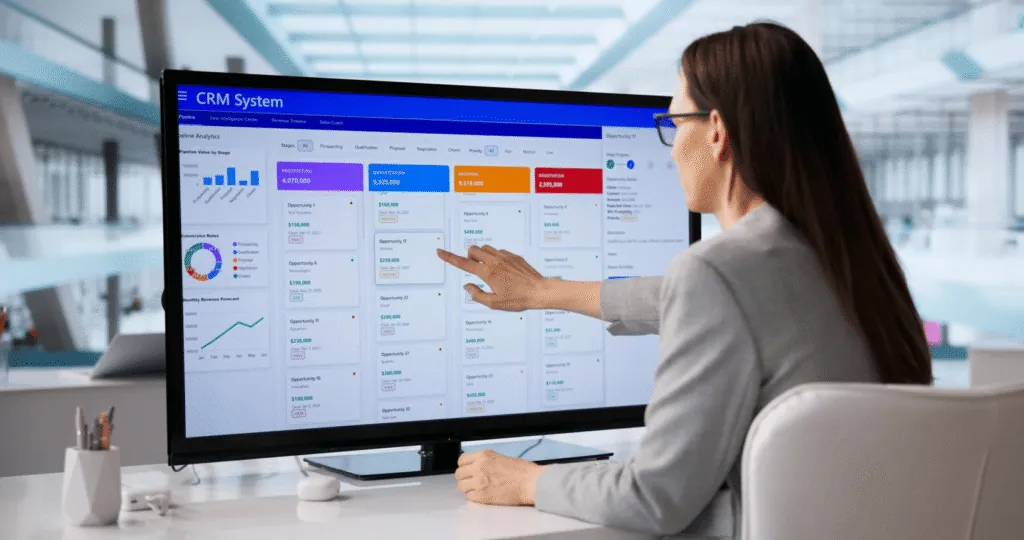
As businesses grow, managing customer relationships through spreadsheets, emails, and manual processes becomes increasingly difficult. Customer information gets scattered across different systems, follow-ups are delayed, and valuable sales opportunities can be missed. A customer relationship management (CRM) system helps businesses centralize customer data, automate sales processes, and improve customer engagement.
Implementing the right CRM solution enables organizations to strengthen customer relationships, streamline operations, and make data-driven decisions. Whether you’re a startup, small business, or growing enterprise, a CRM system provides the foundation for sustainable business growth and long-term customer success.
What is CRM?
Customer Relationship Management (CRM) is a software solution that helps businesses manage customer interactions, sales activities, marketing campaigns, and customer support from a single platform. It stores customer information, tracks communication history, manages leads, and provides valuable insights into customer behavior.
Instead of relying on multiple tools, businesses can use a CRM system to organize workflows, improve collaboration, and deliver a better customer experience. CRM systems help organizations build stronger customer relationships while improving productivity and sales performance.
Why CRM is important for growing businesses
As customer numbers increase, managing leads and customer interactions manually becomes inefficient. A CRM system helps make sure inquiries, meetings, sales opportunities and customer interactions are recorded and easy to find.
Businesses can monitor their sales pipeline, improve communication between teams, and identify growth opportunities using real-time customer insights. Businesses using CRM solutions often improve customer retention, sales efficiency, and overall business performance.
Centralize customer information
A CRM provides a single location for storing customer profiles, communication history, purchase records, and support requests. This allows sales, marketing, and customer support teams to access accurate information whenever they need it.
Having centralized customer data improves collaboration, reduces duplicate records, and helps teams deliver faster and more personalized customer service.

Improve sales management
CRM systems simplify the sales process by tracking leads from the first interaction to the final conversion. Sales teams can prioritize opportunities, schedule follow-ups, automate reminders, and monitor deal progress through a visual sales pipeline.
With better visibility into sales activities, businesses can increase conversion rates and make informed sales decisions.
Strengthen customer relationships
Building long-term customer relationships requires consistent communication and personalized experiences. CRM systems help businesses understand customer preferences, monitor interactions, and provide timely support.
By maintaining complete customer histories, organizations can deliver more relevant services, improve customer satisfaction, and encourage repeat business.
Automate business processes
Modern CRM platforms automate repetitive tasks such as lead assignments, email notifications, follow-up reminders, reporting, and workflow approvals. Automation reduces manual effort, improves operational efficiency, and allows employees to focus on strategic business activities.
Businesses can also integrate CRM with marketing, finance, and customer support systems to create a connected digital ecosystem.
Key benefits of CRM implementation
Implementing a CRM solution offers several business advantages.
- Centralized customer data
- Improved lead management
- Faster sales processes
- Better customer communication
- Increased team collaboration
- Automated business workflows
- Real-time business insights
- Improved customer retention
- Higher sales productivity
- Scalable business growth
Industries that benefit
CRM solutions support organizations across a wide range of industries.
- Information technology
- Healthcare
- Manufacturing
- Retail and e-commerce
- Banking and finance
- Education
- Real estate
- Logistics
- Professional services
- Startups and SMEs
Organizations across every industry can use CRM systems to strengthen customer relationships and improve business performance.
Best practices for CRM implementation
Successful CRM implementation starts with clearly defining business goals and understanding customer management processes. Businesses should choose a CRM that can scale with future growth, train employees effectively, and regularly monitor system performance.
Keeping customer data accurate and encouraging team adoption are equally important for achieving long-term CRM success.
Future trends in CRM
CRM technology continues to evolve with artificial intelligence, predictive analytics, workflow automation, cloud computing, and conversational AI. Intelligent CRM platforms can recommend next actions, forecast sales opportunities, automate customer engagement, and deliver personalized experiences based on customer behavior.
Businesses adopting these innovations will be better positioned to improve customer satisfaction and accelerate digital transformation.
Why choose The Baap Company?
At The Baap Company, we help businesses implement intelligent CRM solutions that improve customer engagement, streamline sales processes, and support long-term business growth. Our Baap CRM is designed to simplify lead management, customer communication, workflow automation, and business reporting through a secure and scalable platform.
With expertise in Software Engineering, AI Systems, Data Intelligence, and Digital Growth Infrastructure, we develop customized CRM solutions that help organizations improve productivity, strengthen customer relationships, and achieve sustainable growth.
Conclusion
A CRM system is more than a customer database. It is a strategic business solution that enables organizations to manage customer relationships efficiently, improve sales performance, and make informed business decisions. As businesses continue to grow, investing in the right CRM solution becomes essential for delivering exceptional customer experiences and maintaining a competitive advantage.
By implementing a scalable CRM platform, organizations can automate routine tasks, improve collaboration, and build stronger relationships with customers. Partnering with The Baap Company ensures your business has the technology and expertise needed to successfully manage customer relationships and drive long-term growth.