Baap Commerce
POS, online store, shopping apps and inventory in one system.
One commerce system for selling everywhere. Manage your products and inventory once, then sell through in-store POS, your own e-commerce website and mobile shopping apps, with every order, payment and stock update in sync.
- Channels
- In-store POS, website, Android and iOS apps
- Inventory
- Multiple stores and warehouses
- Payments
- Online and in-store payments
- Deployment
- Cloud; on-premises with Enterprise
Baap Commerce features
Product catalog
Products, variants, prices, barcodes and images managed in one place.
Inventory and warehouses
Live stock across stores and warehouses, transfers and low-stock alerts.
Point of sale (POS)
Fast in-store billing with barcode scanning, receipts and daily closing.
E-commerce website
Your own online store with cart, checkout and order tracking.
Mobile shopping apps
Android and iOS apps for your customers, dealers or sales teams.
Orders and fulfillment
Every order from every channel, with packing, shipping and returns.
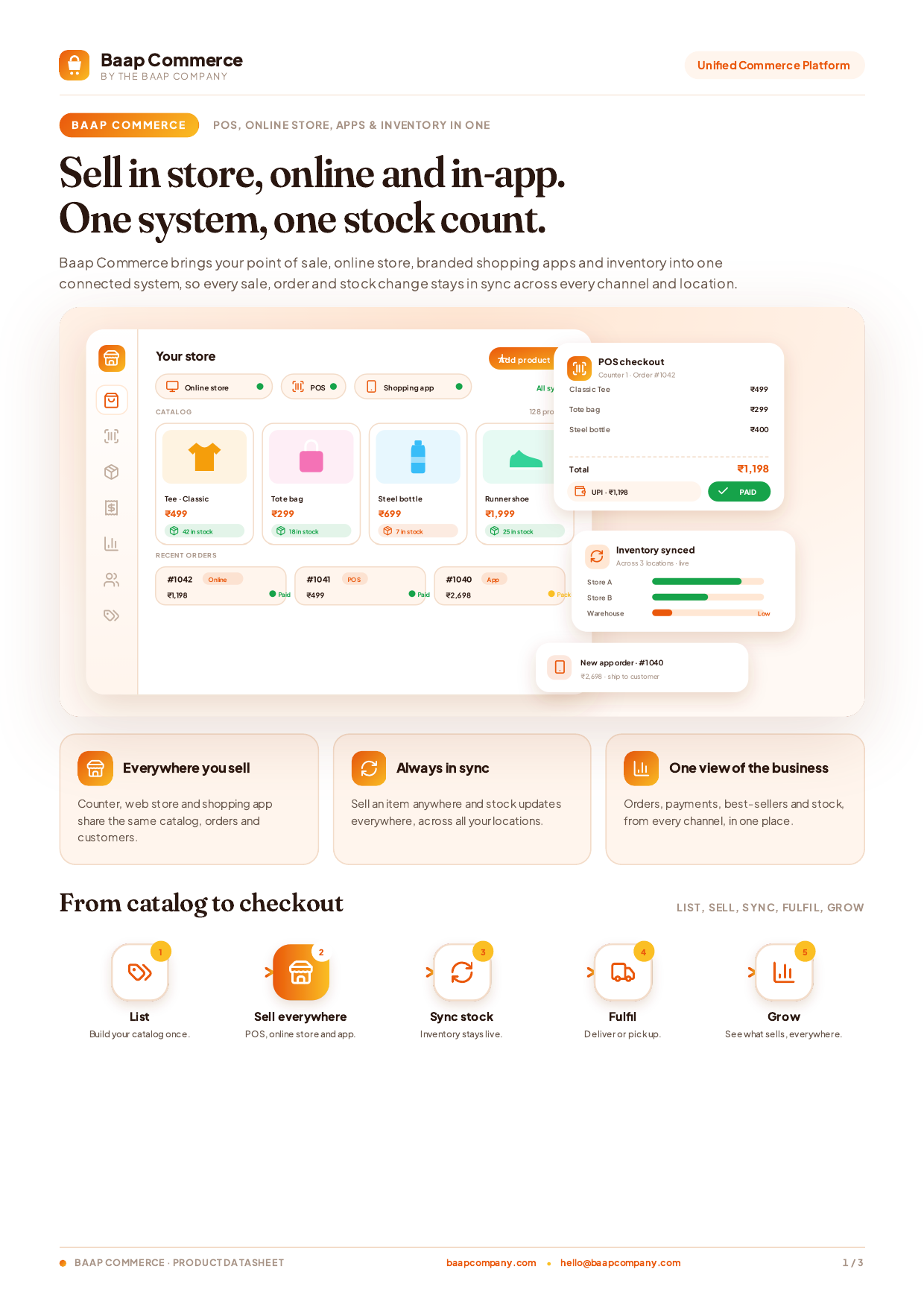
Get the Baap Commerce datasheet
Sell in store, online and in-app. One system, one stock count. A 3-page overview to read later or share with your team.
- Point of sale, online store and branded shopping apps
- Shared catalog, orders and customers across sales channels
- Live inventory synced across channels and locations
- Order fulfillment, payments and business performance reports
How Baap Commerce works
Set up catalog
Import products, prices and opening stock.
Connect channels
Turn on POS, your website and shopping apps.
Sell everywhere
Orders and payments from every channel land in one place.
Track and restock
Live inventory and alerts tell you what to reorder.
Who uses Baap Commerce
Retail stores and chains
One stock count across every outlet and the website.
D2C brands
Online store, app and pop-up POS on one catalog.
Distributors and wholesalers
Dealer ordering app with live stock and pricing.
Manufacturers
Sell direct to customers and dealers from finished-goods stock.
Part of our industry stacks for manufacturing and hospitality.
Deployment, security and support
Cloud hosting
Baap Commerce runs in our cloud as a managed service. For data residency or security requirements, on-premises or hybrid deployment is available with BoardView Enterprise.
Role-based access
Granular roles and permissions, audit history and secure API keys for integrations.
Onboarding and support
Data migration, configuration and training from the engineers who build the product, with support levels set by your plan.
Baap Commerce FAQ
What is Baap Commerce?
Baap Commerce is one commerce system for selling everywhere. Manage your products and inventory once, then sell through in-store POS, your own e-commerce website and mobile shopping apps, with every order, payment and stock update in sync.
Can I sell in store and online from one inventory?
Yes. POS, the e-commerce website and the shopping apps all draw from the same live inventory, so stock updates the moment anything sells.
Do I get my own e-commerce website and apps?
Yes. Baap Commerce includes an online store and mobile shopping apps for Android and iOS, connected to the same catalog, orders and inventory.
Who uses Baap Commerce?
Common uses include retail stores and chains (one stock count across every outlet and the website); D2C brands (online store, app and pop-up POS on one catalog); distributors and wholesalers (dealer ordering app with live stock and pricing); and manufacturers (sell direct to customers and dealers from finished-goods stock).
How does Baap Commerce work?
It works in four steps. 1. Set up catalog: import products, prices and opening stock. 2. Connect channels: turn on POS, your website and shopping apps. 3. Sell everywhere: orders and payments from every channel land in one place. 4. Track and restock: live inventory and alerts tell you what to reorder.
Does Baap Commerce work with other Baap products?
Yes. Baap Commerce connects with Baap CRM, AI Workflow Automation and BoardView: customers and orders stay in sync between Commerce and CRM; automate order, stock and fulfilment steps; track orders and inventory on BoardView boards. Other systems connect through AI Workflow Automation, webhooks and APIs, scoped with you.